
WELCOME BONUS 300%
UP TO €2000 + 100
FREE SPINS
UP TO €2000 + 100
FREE SPINS
Home → Blackjack
Blackjack at Winbeatz: Variants, Rules and Payouts
Ace Split: only one card per hand
Ace splitting allows players to divide a pair of Aces into two separate hands, but the rule restricts each new hand to receiving exactly one additional card. This limitation significantly reduces the potential for forming strong totals compared to unrestricted splitting rules found in other variants. The constraint applies universally across all live dealer blackjack tables offered by the casino platform.
Resplitting Aces is generally permitted, which improves the Return to Player by approximately 0.08 percentage points according to statistical analysis of standard rules. However, because only one card is dealt to each split Ace, the opportunity to capitalize on this rule modifier is structurally limited. Players must accept that even with resplitting enabled, the hand strength remains capped at a single draw per Ace.
The house edge increases by 0.22 percentage points when the dealer hits on Soft 17, making proper strategy essential for minimizing losses. While early surrender offers greater value up to 0.6 percentage points, it is rarely available in live settings. Consequently, adhering to basic strategy under these restrictive split conditions becomes critical for maintaining optimal long-term returns.
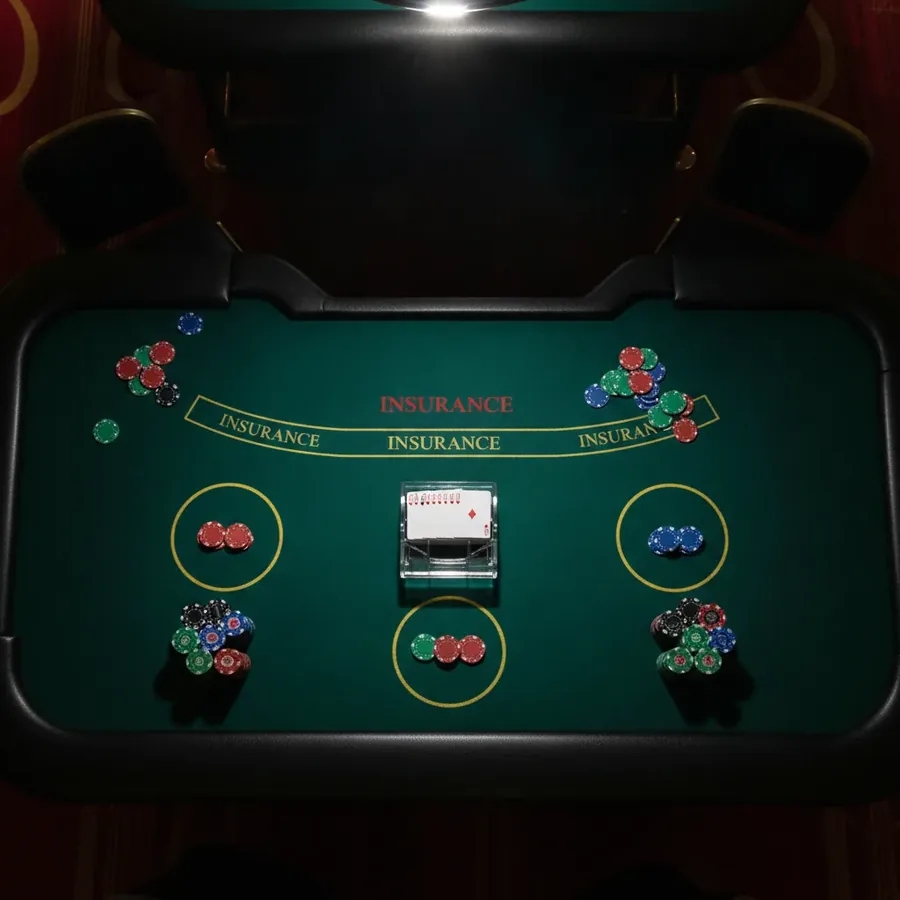
Side Bets don't count towards bonus turnover
The welcome bonus offers 300 percent up to €2,000 plus 100 free spins, but table games contribute only 10 percent toward wagering requirements. Side bets such as Any Pair or 21+3 in Infinite Blackjack are excluded from contributing to this turnover calculation entirely. This exclusion means that funds wagered on these specific wagers do not reduce the remaining bonus balance obligation.
Infinite Blackjack features four side bets including Hot 3 and Bust It, each carrying its own distinct house edge separate from the main game. Lightning Blackjack adds multipliers up to 25x, while Quantum Blackjack Plus includes quantum multipliers reaching 1,000x on three-card combinations. Despite their high payout potential, none of these side bet outcomes assist in clearing the mandatory wagering threshold set by the promotion terms.
Wagering requirements must be met using eligible game contributions, with slots counting at 100 percent versus the 10 percent rate for table games. A €1,000 bonus would require €40,000 in total turnover if played exclusively on slots, whereas blackjack contributes minimally. Players seeking to clear the bonus efficiently should prioritize high-contribution games rather than relying on live dealer side bet action.
When can you increase your bet?
Betting limits vary significantly across different live dealer providers, with Evolution offering stakes ranging from 1 EUR to 2,500 EUR in Lightning Blackjack. Playtech’s Quantum Blackjack Plus also permits maximum bets up to 5,000 EUR, providing high rollers with substantial wagering flexibility during sessions. These limits apply strictly to the base game wager and exclude any additional amounts placed on optional side bets.
Infinite Blackjack extends the upper betting cap to 5,000 EUR per hand, allowing players to scale their exposure during favorable streaks or strategic moments. The lower bound typically starts at 1 EUR, ensuring accessibility for casual players while maintaining a wide range for serious gamblers. Adjustments to bet size can only occur between rounds, as real-time changes are prohibited once the dealer begins dealing cards.
Blackjack Surrender allows players to forfeit half their bet after the dealer checks for blackjack, effectively reducing the loss on weak hands. This rule modifies the house edge by approximately 0.08 percentage points, offering a slight advantage over standard surrender rules. Players must decide whether to surrender before taking any other actions, as this option closes immediately upon dealer verification of an Ace or Ten-value hole card.
How much time is left for the decision?
Live dealer games operate on strict schedules where dealers deal cards sequentially to unlimited seats without waiting for individual player delays. Each round follows a predefined timeline managed by the studio software, ensuring consistent pacing across all participating tables regardless of participant count. This automated structure prevents prolonged pauses that could disrupt the flow of play for other users at the virtual table.
Basic strategy execution requires precise timing, especially when facing decisions like doubling down or splitting pairs under tight constraints. While exact countdown timers are not explicitly displayed, players must act promptly to avoid automatic folds or misplays due to timeout penalties. Failure to respond within the allotted window results in the system applying default actions based on preset algorithms.
The RTP of 99.54 percent for six-deck blackjack assumes optimal decision-making executed within the required timeframe for every hand dealt. Deviating from this strategy due to hesitation or delayed input introduces errors that erode the theoretical return over thousands of hands. Maintaining focus and readiness to act instantly is therefore crucial for preserving the mathematical edge promised by favorable rule sets.
Blackjack Payout 3:2 Explained in Detail
A natural blackjack pays 3:2, meaning a €100 wager yields a €150 profit, establishing the baseline expectation for successful hands. This ratio directly influences the overall Return to Player, with deviations such as 6:5 payouts drastically altering the game's profitability for participants. The 3:2 standard remains the most favorable configuration available in reputable live dealer environments today.
Switching to a 6:5 payout structure increases the house edge by exactly 1.39 percentage points, making it significantly less advantageous than traditional formats. For instance, a €10 blackjack would only return €12 instead of €15, representing a substantial reduction in expected value over time. Players encountering this reduced payout ratio should exercise caution, as it negates many strategic advantages gained through optimal play.
Liberal Vegas Strip rules combine S17, DAS, Resplit, and Late Surrender to achieve a low house edge of 0.28 percent alongside 3:2 payouts. This combination represents the most player-friendly rule set currently accessible in online live dealer offerings. Maintaining access to 3:2 tables ensures that strategic decisions yield proportional rewards, preserving the integrity of long-term bankroll management strategies.
Blackjack variants at a glance
| Variant | Payout | House edge | Rule | Bet range |
|---|---|---|---|---|
| Blackjack Ein Deck, klassische Regeln, 3:2 | 99.85% | 0.15% | Weniger Decks = niedrigerer Vorteil; ein Deck gibt ca. −0.48 Prozentpunkte gegenüber 8 Decks. Oft durch 6:5 Auszahlung kompensiert. | Blackjack 3:2, Gewinn 1:1 |
| Blackjack Split / Double / H17 – Regel-Effekte | n.a. (Regel-Modifikatoren) | H17 +0.22 Prozentpunkte; RSA −0.08 Prozentpunkte; DAS −0.14 Prozentpunkte | Dealer Hits Soft 17 verschlechtert RTP um 0.22 Prozentpunkte; Resplit Aces verbessert um 0.08 Prozentpunkte; Double After Split verbessert um ca. 0.14 Prozentpunkte; 6 Decks statt 8 – ca. 0.02 Prozentpunkte. | Double – Einsatz ×2 mit einer Karte; Split – bis 4 Hände; Ass-Split meist mit einer Karte. |
| Blackjack Surrender (Late Surrender) – Regel-Effekt | n.a. (Regel-Modifikator) | −0.08 Prozentpunkte | Spieler gibt Hand nach Dealer-Blackjack-Prüfung auf, verliert die Hälfte des Einsatzes. Verbessert RTP um ca. 0.08 Prozentpunkte. Early Surrender ist wesentlich wertvoller (bis −0.6 Prozentpunkte), aber extrem selten. | Rückzahlung 50% des Einsatzes |
| Blackjack Liberal Vegas Strip (liberale Regeln, 3:2) | 99.72% | 0.28% | Günstigste Regelkombination: S17 + DAS + Resplit + Late Surrender. Standardabweichung 1,15 | Blackjack 3:2, Gewinn 1:1 |
| Blackjack Auszahlung 6:5 statt 3:2 (6 Decks) | 98.15% | 1.85% | Ersatz von 3:2 durch 6:5 fügt exakt +1.39 Prozentpunkte zum Vorteil des Casinos hinzu – stärker als jede andere Regeländerung. Bei $10 Einsatz zahlt Blackjack $12 statt $15. | Blackjack 6:5, Gewinn 1:1 |
| Blackjack Insurance / Versicherung (6–8 Decks) | 92.53% | 7.47% | Separate Nebenwette bis 50% der Hauptwette, wenn der Dealer ein Ass hat. Basisstrategie schreibt IMMER Ablehnung vor (außer Karten zählen bei True Count ≥ +3). Bei einem Deck Vorteil ≈ 5.88% | Insurance 2:1 |
No Double Down on three cards
The rule restricting double downs to two cards eliminates a high-value strategic option that significantly impacts the long-term return of the game. Standard Blackjack strategy relies on doubling down on two cards to maximize profit when the player holds an 11, a move forbidden here. This limitation increases the house edge by approximately 0.14 percentage points compared to tables allowing Double After Split or broader doubling rules. Players must accept lower expected returns on these specific hands during their live dealer sessions.
This restriction forces players to hit or stand on hard totals like 9, 10, or 11 against weak dealer upcards where doubling would normally be optimal. The loss of this flexibility reduces the theoretical RTP from potential highs near 99.85% for single-deck games to lower values typical of restrictive variants. Consequently, the average cost per hand rises slightly as players cannot capitalize on favorable statistical moments to increase their wager size. This structural disadvantage applies universally across all live blackjack tables enforcing this specific rule set without exception.
Comparing this rule to the liberal Vegas Strip variant reveals a stark contrast in player advantages and strategic depth available at the table. The Vegas Strip allows doubling on any two cards and often permits resplitting, offering a much lower house edge of just 0.28%. In contrast, the no-double-on-three-cards rule removes a key tool for mitigating losses and maximizing wins on strong starting hands. Players seeking the best possible odds should avoid tables with this specific limitation unless other compensatory rules are present.
Double Down vs Simple Hit on 11
Standard basic strategy dictates that players must always double down when holding an 11 against any dealer upcard except a ten-value card, a fundamental rule of the game. This action maximizes expected value by increasing the bet when the probability of drawing a ten is highest, typically yielding a positive expectation. Deviating to a simple hit on 11 sacrifices potential profit and increases the overall house edge by roughly 0.14 percentage points per hand played over time. Adherence to this strategy is critical for maintaining optimal performance at the live dealer table.
The mathematical advantage of doubling on 11 stems from the high frequency of ten-valued cards in the deck, which completes a strong twenty or twenty-one. When a player hits instead, they risk busting or settling for a weaker total, whereas doubling locks in the advantage of the upcoming card draw. This specific decision point contributes significantly to the overall RTP, with correct play pushing returns toward the 99.54% range for six-deck games. Failure to double represents a costly error that erodes the bankroll faster than any other common strategic mistake made by novice players.
Infinite Blackjack offers unlimited seats but requires strict adherence to basic strategy to achieve its advertised 99.47% RTP, including the mandatory double on 11. Lightning Blackjack introduces multipliers but does not alter the underlying requirement to double down on eleven for maximum theoretical return. Quantum Blackjack Plus Live similarly demands precise strategy execution to benefit from its side bets while maintaining the core advantage of doubling on strong hands. Ignoring this rule undermines the statistical benefits provided by these advanced live dealer formats regardless of the provider or table limits.
Four hours of play with 300 EUR bankroll
A bankroll of 300 EUR allows for extended gameplay at minimum stake tables, such as those found in Infinite Blackjack with bets starting at 1 EUR. Assuming an average betting frequency of sixty hands per hour, a player can sustain four hours of activity without risking immediate ruin if managing stakes conservatively. The house edge of approximately 0.46% on standard six-deck games implies an expected loss of about 0.54 EUR per hour based on minimal wagers. This duration provides ample opportunity to experience live dealer features while monitoring variance and adjusting bet sizes accordingly throughout the session.
Lightning Blackjack operates within a similar timeframe but introduces volatility through multipliers that can drastically alter the bankroll trajectory in a single round. With a 300 EUR budget, players might place smaller base bets to survive the variance introduced by these random multiplier events on winning hands. The theoretical RTP of 99.56% suggests long-term stability, yet short-term swings can deplete funds faster than standard tables due to the higher stakes often associated with bonus features. Careful bankroll management remains essential to withstand these fluctuations during the four-hour window of play.
Quantum Blackjack Plus Live presents another variable with its unique multiplier system affecting three-card combinations, requiring disciplined staking to preserve the initial 300 EUR deposit. The RTP of 99.57% indicates favorable odds, but the presence of side bets and special rules can accelerate the rate of fund consumption if not monitored. Over four hours, the cumulative effect of the house edge and potential side bet losses will gradually reduce the bankroll, highlighting the importance of setting win/loss limits. This timeframe serves as a practical test for understanding how different live dealer mechanics impact long-term financial outcomes.
Blackjack Insurance is a separate side bet paying 2:1 that should generally be avoided as it carries a high house edge of 7.47%, significantly draining the bankroll. Including insurance in a four-hour session with a 300 EUR budget increases the expected hourly loss substantially, potentially reducing the total playtime available. Avoiding this suboptimal wager preserves capital for main game decisions, ensuring the bankroll lasts longer and providing more opportunities to apply basic strategy effectively. This exclusion is crucial for maintaining the integrity of the planned session duration and financial expectations.
How long do 100 EUR last at a 1 EUR table?
At a minimum bet of 1 EUR on Infinite Blackjack, a 100 EUR bankroll supports exactly one hundred hands if every bet loses, representing the absolute worst-case scenario. However, with a house edge of only 0.46%, the expected loss per hand is negligible, allowing the bankroll to endure significantly longer than the linear count suggests. Variance plays a major role, meaning wins and losses will fluctuate, but the low edge ensures slow depletion compared to higher-stake or less favorable game variants. This duration provides a realistic estimate for casual players testing the waters without significant financial exposure.
Infinite Blackjack allows unlimited players at the table, ensuring constant availability and consistent pace regardless of peak traffic times, which affects the total number of hands completed. With a 1 EUR stake, a player can complete hundreds of hands per hour, extending the lifespan of the 100 EUR deposit well beyond the initial calculation. The side bets available, such as Any Pair or 21+3, introduce higher volatility and should be avoided to maintain the conservative playstyle required for longevity. Sticking to the main game maximizes the utility of the small bankroll over the extended playing period.
Lightning Blackjack shares similar minimum stake parameters but introduces multipliers that can rapidly increase both wins and losses, altering the expected duration of the 100 EUR bankroll. While the base RTP is 99.56%, the potential for large payouts comes with increased variance that can deplete funds quickly if luck turns unfavorable. Players must decide whether to engage with the multiplier feature or stick to base bets to extend playtime, as each choice impacts the sustainability of the initial deposit. This decision point is critical for managing the limited resources available at the lowest stake level.
Blackjack Insurance, offering a 2:1 payout, is statistically unfavorable with a house edge of 7.47%, making it a poor use of a small 100 EUR bankroll. Taking insurance on every instance where the dealer shows an ace would drastically reduce the number of hands playable, potentially ending the session prematurely. Avoiding this side bet preserves the full bankroll for main game actions, ensuring the player can utilize the full potential of the low minimum stake. This discipline is essential for maximizing enjoyment and minimizing unnecessary losses during the session.
Six Card Charlie Pays Immediately with Six Cards
The Six Card Charlie rule automatically awards a win when a player draws six cards without busting, a rare event that significantly impacts the game's dynamics and payout structure. This rule effectively reduces the house edge by providing a free win in situations where standard strategy would require further hits, thus improving the overall RTP. Unlike standard blackjack where busting ends the hand, this exception rewards persistence and careful card counting, offering a distinct advantage to skilled players who can track the deck composition. It adds a layer of excitement and strategic depth to the traditional game format.
Infinite Blackjack may offer variations of this rule, though standard Evolution titles typically focus on basic strategy rather than complex side conditions like Six Card Charlie. The presence of such a rule would enhance the player's position, particularly in games with fewer decks where the probability of drawing six cards without exceeding 21 is higher. Players should verify the specific rules of the live table they join, as this feature is not universal across all blackjack variants offered by different providers. Understanding these nuances is crucial for optimizing strategy and anticipating potential payouts during gameplay.
Quantum Blackjack Plus Live focuses on multipliers for three-card hands rather than extended card counts, meaning the Six Card Charlie rule is likely absent from this specific variant. Instead, players rely on the 1,000x multiplier for perfect 21s, which offers a different type of high-reward opportunity compared to the cumulative win of a six-card hand. The distinction between these rules highlights the diversity in live dealer offerings, requiring players to adapt their strategies to the specific mechanics of each table. Recognizing these differences ensures informed betting decisions aligned with the game's actual structure.
Lightning Blackjack utilizes lightning multipliers on winning hands rather than special rules like Six Card Charlie, focusing on instant gratification through random number generation. The absence of a six-card win condition means players must rely on traditional basic strategy and the potential for multiplier boosts to maximize their returns. This approach simplifies the game mechanics, allowing players to focus on core decisions without worrying about complex edge cases or rare winning combinations. The emphasis remains on the immediate outcome of each hand rather than accumulated card counts.
Chose Wrong Table for 5 EUR Bankroll
The Quantum Blackjack Plus Live table by Playtech accepts stakes between 1 and 5,000 EUR. This minimum entry point is significantly higher than the 1 EUR floor found at Evolution’s Lightning Blackjack. Players with a tight budget must avoid this specific variant to preserve their funds.
Lightning Blackjack offers a lower barrier to entry with bets starting at just 1 EUR. In contrast, Quantum Blackjack Plus Live requires a minimum stake of 1 EUR but caps wins with multipliers up to 1,000x on three-card combinations totaling twenty-one points. The cost structure favors high rollers over casual players seeking low-risk entertainment.
Infinite Blackjack from Evolution also starts at 1 EUR but allows unlimited seats at the table. This game features four side bets including Any Pair and Bust It alongside standard play. The accessible minimum bet makes it suitable for bankrolls under fifty euros compared to the stricter limits of other live options.
Highroller from 500 EUR per hand
Quantum Blackjack Plus Live accommodates wagers up to 5,000 EUR per single hand played. This maximum limit matches the ceiling set by Infinite Blackjack from Evolution exactly. High rollers can place substantial bets without hitting a table restriction that would force them to split their action across multiple seats.
Lightning Blackjack by Evolution restricts individual hands to a maximum of 2,500 EUR. This cap is half the maximum allowed at Quantum Blackjack Plus Live and Infinite Blackjack. Players needing to wager larger amounts per decision will find the Evolution table insufficient for their specific betting strategy requirements.
The welcome bonus terms allow a maximum bet of five euros during wagering regardless of the table limit. This rule overrides the 5,000 EUR capacity of Quantum Blackjack Plus Live for bonus funds effectively. Violating this five euro cap results in forfeiture of any winnings generated while exceeding the permitted stake size.
Even Money only possible with Dealer Ace
Blackjack Insurance is offered when the dealer shows an Ace as their upcard. This side bet pays 2:1 if the dealer has blackjack and costs 50% of the original wager otherwise. The house edge for this specific insurance bet stands at a steep 7.47% against the player.
Taking even money is essentially accepting a guaranteed payout before checking for dealer blackjack. This option is mathematically identical to buying insurance when the dealer holds an Ace showing. Basic strategy dictates rejecting this offer because the expected value is lower than waiting for the resolution.
The RTP for standard blackjack drops significantly when players accept insurance or even money incorrectly. While the base game RTP reaches 99.72% at Liberal Vegas Strip, poor insurance decisions erode this advantage rapidly. Players should strictly avoid these bets unless they are counting cards with a true count of plus three or higher.
RNG draws cards from virtual eight-deck shoe
Liberal Vegas Strip uses six decks with liberal rules yielding an RTP of 99.72%. This figure represents the theoretical return over millions of hands played under optimal conditions. The house edge remains exceptionally low at just 0.28% due to favorable rule variations like surrender.
Single deck blackjack offers the best odds with an RTP of 99.85% and a house edge of 0.15%. Fewer decks reduce the probability of the dealer busting slightly less than multi-deck games but improve player flexibility. This version often compensates for better odds with stricter payout structures like 6:5 for natural blackjacks.
Six deck games with soft seventeen standing and double after split rules provide an RTP of 99.54%. The house edge sits at 0.46% requiring strict adherence to basic strategy for optimal results. Players must follow precise playing decisions to achieve this mathematical expectation consistently across all hands dealt.
Surrender vs Playing Out on 16 vs 10
Late Surrender allows players to forfeit half their bet after the dealer checks for blackjack. This rule improves the overall RTP by approximately 0.08 percentage points compared to no surrender options. Players holding sixteen against a dealer ten should utilize this feature to minimize long-term losses significantly.
Playing out sixteen against a ten increases the risk of losing the entire wager amount. Without surrender rights, the player must hit and likely bust or lose to a superior dealer hand. The mathematical disadvantage grows substantially when forced to play suboptimal hands without the escape valve of surrender.
Early Surrender is much more valuable than late surrender reducing the house edge by up to 0.6 percentage points. However, this generous rule is extremely rare in modern online casino environments and live dealer tables. Most available games only offer late surrender which triggers after the dealer confirms they do not hold blackjack.
Contact
Live - online chat
Banking









Providers












Winbeatz Casino 2026